
Pittsburg County Arrest Warrant Service
In Pittsburg County, the sheriff's office serves District Court papers, and municipal police may serve a city order. The issuing court and the agency that executes its order play different roles, so aim each question at the right office.
Pittsburg County Arrest Warrant Access
OCCA Rule 2.6 can keep Pittsburg County warrant documents with complete identifiers out of public view. Even then, a docket lead may stay visible while the scanned order is withheld.
Pittsburg County Arrest Warrant Next Steps
Before you drive to the Pittsburg County sheriff or the courthouse, ask about the court, case number, bond, hold, counsel, surrender procedure, and next appearance. Get those answers first.
Arrest Warrants in Pittsburg County
Oklahoma Title 22 §171 lays out a verified-complaint and probable-cause path. A complaint goes before a magistrate or judge. That judicial officer reviews whether an offense and probable cause are shown, and if the standard is met, the order identifies the authority to arrest. In Pittsburg County, the District Court of Judicial District 18 is the main state trial court. The Court Clerk keeps the permanent case and appearance records. The sheriff serves District Court papers, while a municipal police agency may serve a city court order. Each office answers a different part of the process.
Pittsburg County Arrest Warrant Contents
An arrest warrant file in Pittsburg County can hold more detail than a docket shows. OCCA model forms illustrate the fields a court may use. Personal identifiers stay out of public content. A case event may be visible even when the scanned document is restricted.
| Case identifier | District Court case number, often using CF, CM, TR, or WL format. |
|---|---|
| Charge | Offense description, statute, and classification tied to the complaint. |
| Issuing authority | Judge, associate or special judge, or magistrate and court. |
| Command | Instruction to law enforcement to arrest and bring the person before court or a lawful custodian. |
| Service return | Receipt, date, officer or agency, service details, and warrant number. |
| Bond or status | Case-specific bond, active, served, returned, recalled, or later court action. |
A Pittsburg County public record can still be useful without revealing every field on the underlying order.
Probable Cause Starts the Process
The local framework runs in a set sequence: verified complaint, judicial review, order, service, custody or appearance, and later case action. The judge or magistrate issues the order. The clerk records it. The sheriff or another authorized agency may execute it. From there, the prosecutor, the defense lawyer, and the court handle the underlying case on the court's schedule. Pittsburg County publishes no arrest warrant count and no public active arrest roster, so treat any number you see elsewhere with doubt. A jail roster, an old news item, or a third-party list of names will not tell you the county's warrant volume. The office itself can confirm a particular record, and no invented county statistic can.
Plain meaning: An arrest warrant permits custody under a court order. It does not by itself decide guilt, sentence, or the final outcome of the case.
How Pittsburg County Arrest Warrants Are Served
The Pittsburg County sheriff's official role is serving warrants and processing papers ordered by the District Court. The office sits at 1210 N West Street in McAlester, and the published phone number is 918-423-5858. The public county profile lists no dedicated warrant desk, no surrender form, and no universal walk-in schedule. So call before you head to the Justice Center. Ask whether the sheriff holds the order, what identification you need, whether a bond or no-bond status applies, and what court appearance follows. Municipal orders may run through city police and the issuing city court instead.
Sheriff service channel
Pittsburg County Sheriff's Office
918-423-5858
1210 N West Street, McAlester, OK 74501
Arrest Warrants, Summonses, and Bench Warrants
Short notices get several court papers confused. A summons asks a person to appear. A bench warrant answers a missed appearance or another court-order problem. An arrest warrant follows a probable-cause complaint, and Pittsburg County courts treat each paper differently. A cost summons and a cost cite-and-release form are not the same as a cost arrest warrant.
| Document | Why it appears | Who explains next action |
|---|---|---|
| Arrest warrant | Probable-cause process | Issuing court and authorized service agency |
| Bench warrant | Missed required appearance or court order | Court Clerk or city clerk |
| Summons | Notice to attend a cost or other hearing | Issuing court |
| Cost cite-and-release | Financial-obligation report-to-clerk process | Court Clerk and the captioned court |
Why a Warrant Image May Be Missing
OCCA Rule 2.6 bars display of documents like arrest, bench, cost, and search warrants and traffic tickets that contain complete personal identifiers through OSCN or ODCR. The result can be a visible Pittsburg County docket event with no scanned order behind it. Sealed, investigatory, and juvenile material may be restricted for other reasons.
The access boundary is shown in the official OCCA Rule 2.6 material.
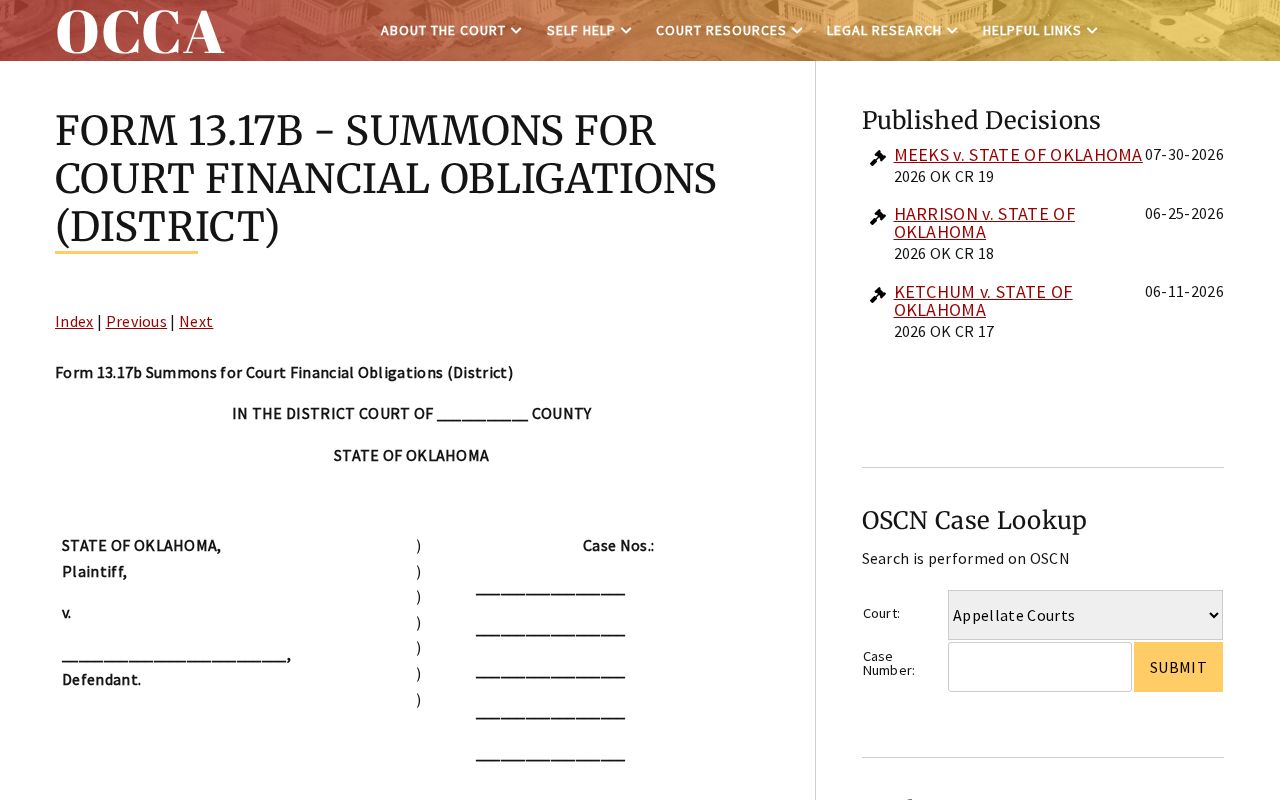
A missing document does not prove the docket event is wrong or that no order exists in Pittsburg County. Ask the Court Clerk what can be released.
County and Federal Arrest Orders Differ
A Pittsburg County District Court or city order is not a federal warrant. The county sits in the Eastern District of Oklahoma. That federal courthouse and its Marshals contacts are separate from the Pittsburg County sheriff. PACER can show federal case material. A sealed federal criminal case or a live operational hold may not appear in a free public search.
Federal routing is described by the official Eastern District of Oklahoma court.
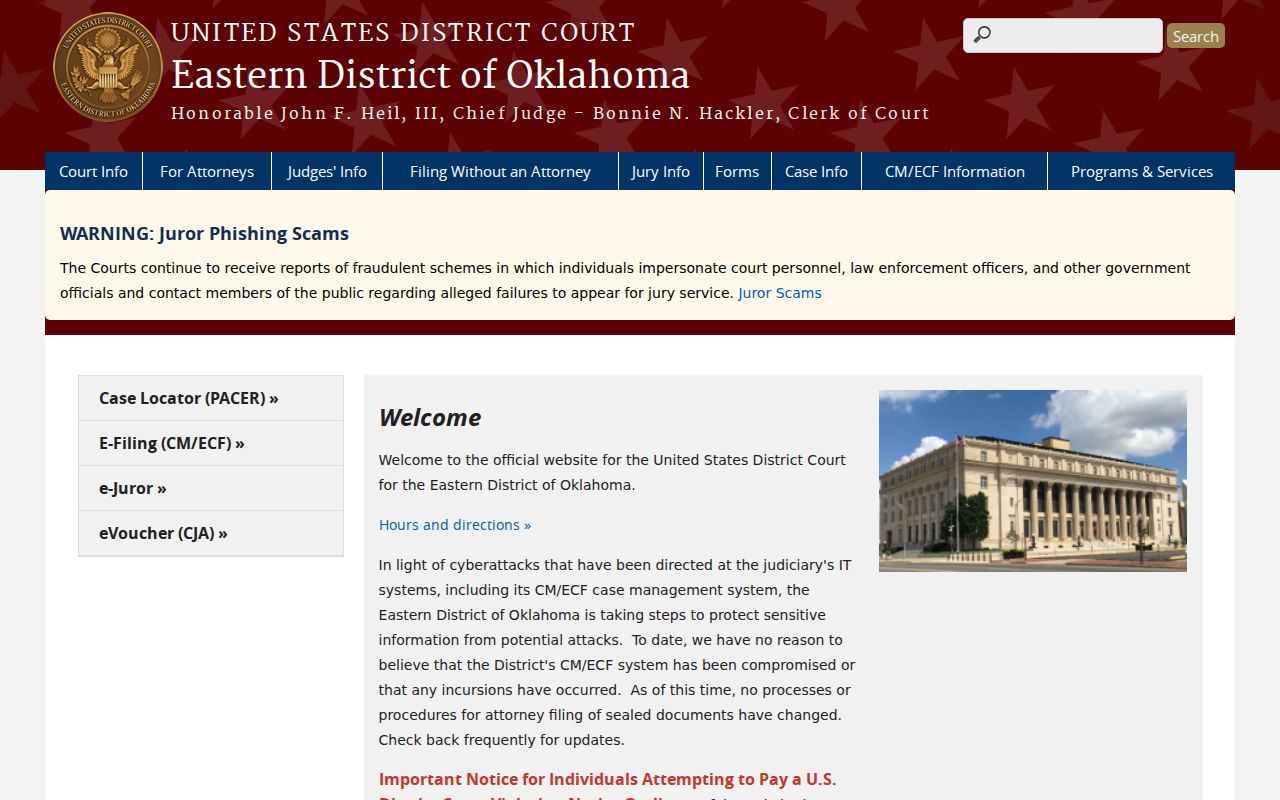
Do not ask a Pittsburg County clerk to recall a federal warrant. Use counsel and the federal court or Marshals channel.
What to Do If There Is a Warrant
First, confirm the issuing court, case number, current status, bond or no-bond instruction, and required appearance. The Court Clerk can explain the Pittsburg County District Court docket. The sheriff can explain service or custody steps. A city clerk handles a municipal matter. An attorney can arrange contact, a motion, bond, or a voluntary surrender when that is the lawful course.
Act carefully: Do not predict arrest timing from an online result, pay an unsolicited caller, or travel to a jail before confirming the court's instructions.
- Search OSCN or ODCR with the known case number.
- Call 918-423-4859 for District Court status.
- Ask whether a lawyer should arrange the next contact.
- Confirm what receipt, order, or new date proves the warrant action.
Pittsburg County Arrest Record Access
Oklahoma's Open Records Act, 51 O.S. §§24A.1-24A.30, gives the public a route to records that exist, though some parts stay closed. When you file, name the case or citation, the record type, the date window, and whether you want to inspect or get copies. Pittsburg County can withhold portions, so ask for the releasable part and the legal basis for anything cut. Fees vary. No flat warrant-search charge appears on the county fee page, so confirm copying or certification costs before you send anything sensitive. For criminal files, the Court Clerk, not the County Clerk's land-record office, is the right desk.
Arrest Warrant Status Is Time-Specific
A warrant's status changes. One case may sit as issued, then served, bonded, recalled, or quashed as the court moves on it. So a booking entry only shows who was in custody at one moment, and a dated news story is not live status. A name match proves little on its own. Call the issuing clerk in Pittsburg County and ask what the entry means today and what still remains open in the case. Write down the call date, office, case number, clerk's direction, payment proof, any recall order, and the next appearance. Those notes let a family member with permission reach the right desk without spreading private records.